top of page

LILAC EVOKES A BLOOMING BEAUTY WITHIN SOFTNESS, GENTLY REMINDING US OF THE JOY OF NEW BEGINNINGS, LIKE SPRING.
Its delicate light brings a touch of grace, freshness, and serenity to our lives.
Its essence illuminates your life, your way of living, and your design.

BEAUTY KEYWORDS
SOFTNESS GRACE ROMANCE FRESHNESS HOPE ELEGANCE TENDERNESS
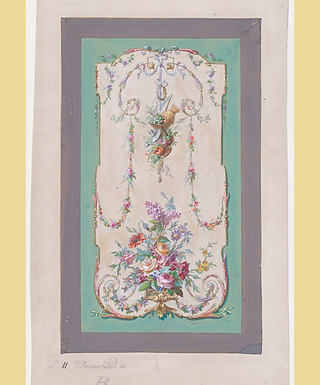
Design for a Panel with a Large Bundle of Flowers and Leaves and a Hanging Thin Bundle Containing Gardening Tools Inside an Ornamental Frame Decorated with Thin Garlands of Flowers and Leaves — Anonymous, France, 1870–1900. The Metropolitan Museum of Art, New York.
THE STORY OF BEAUTY
The name lilac comes from the lilac flower, which blooms in pale shades of purple in spring.
Native to regions spanning Europe and western Asia, lilacs have long brought beauty to gardens and everyday life through their delicate blossoms and distinctive fragrance.
In 17th- and 18th-century Europe, lilacs were planted in gardens and the grounds of country estates, where they were cherished as flowers heralding the arrival of spring. Their pale purple hues and sweet fragrance evoked the beauty of the changing season, as winter’s stillness gave way to spring.
By the 19th century, lilacs had become even more widely appreciated in European and American garden culture. Their blossoms came to symbolize the elegance of spring and a youthful sensibility.
In France in particular, the delicate purple hues and fragrance of lilacs found their way into everyday life through gardens, interior decoration, and perfumery. The color became cherished for its ability to express a refined and delicate beauty.
In Japan, meanwhile, pale purple has long been associated with a delicate and graceful beauty.
Soft purples inspired by plants and the changing seasons — such as fuji-iro, or wisteria purple, and wakamurasaki, or young purple — have appeared in clothing, literature, and traditional crafts, nurturing a uniquely Japanese sensibility of softness and refinement.
Today, lilac brings together the delicate charm of spring cultivated in European garden culture and the elegance of pale purple long cherished in Japan. It continues to be loved across a wide range of fields, including fashion, interiors, fragrance, and design.
Lilac is a color that evokes the changing seasons, new beginnings, and the small joys found in everyday life.

Mäda Primavesi (1903–2000) — Gustav Klimt, Austria, 1912–13.
The Metropolitan Museum of Art, New York.
THE BEAUTY OF COLOR
Lilac holds the beauty of new joys, evoking the arrival of spring.
Lilac flowers bloom as winter gives way to warmer days, announcing the arrival of spring through their delicate hues and sweet fragrance.
Their graceful blossoms have long been cherished in European garden culture, inspiring people to bring the beauty of the changing seasons into everyday life.
Perhaps beauty does not always lie in great transformations, but sometimes in noticing the slightest changes in the light.
Lilac is a color that gently invites us to cherish the small joys of today and the new moments that lie ahead.

Yuka Miyatake
QUESTION FOR YOU
Are there moments in your everyday life when lilac evokes the lightness of spring or the feeling of a new beginning?
Perhaps this color gently reminds you of the quiet hope within yourself and your sensitivity to the beauty that has yet to unfold.
Take a moment to discover the “small hope in lilac” that lives within your heart.
DISCOVER
YOUR SENSE OF
BEAUTY



WHEN YOU...
What speaks to you today?


bottom of page